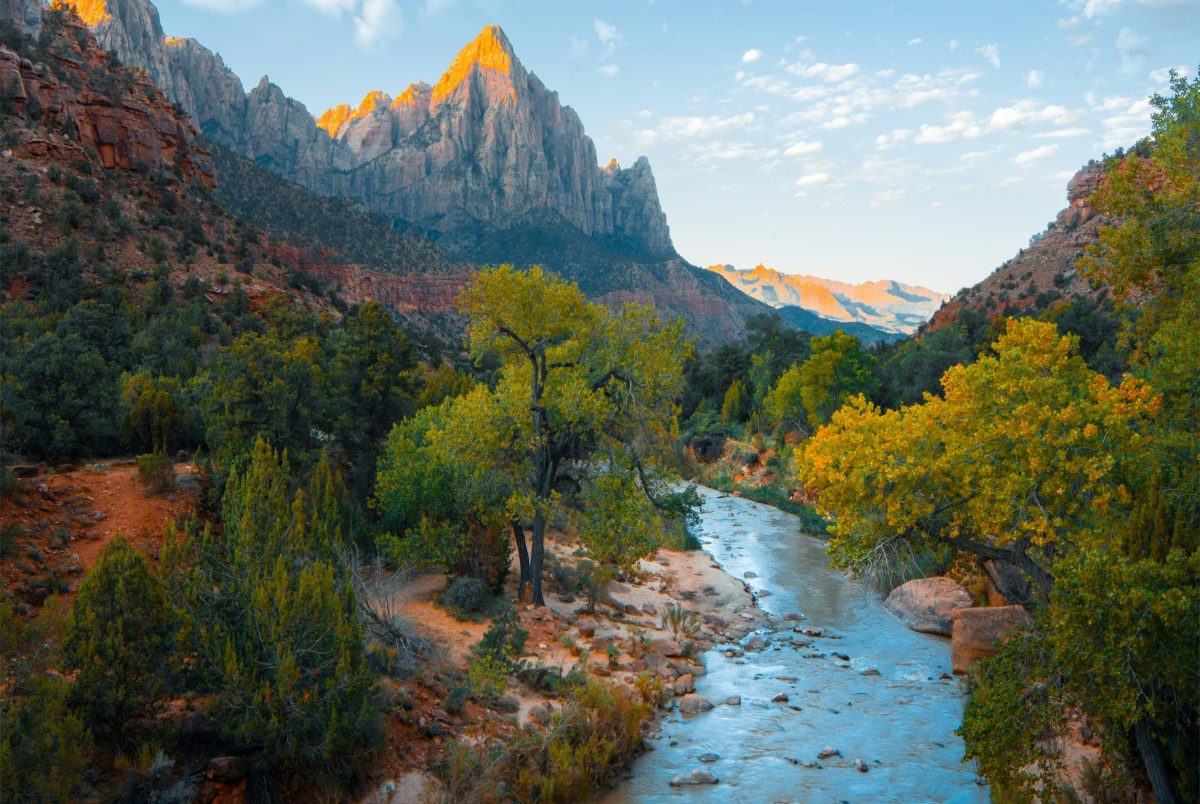
Long ago, the Creator built the world.
As he created, he assigned the things he made to the gods to watch over and protect them.
When he created the Sun, he assigned it to Lumas, the god of light.
When he created the Stars and the Moon, he assigned them to Serian, the god of darkness.
When he created the winds and the sky, he assigned them to Tyena, the goddess of the air.
When he created the trees, the grass, and the plants, he assigned them to Dryar, the god of greenery and nature.
When he created the seas and rivers, he assigned them to Merina, the goddess of water.
When he created the animals of the air, the ground, and the sea, he assigned them to Faunus, the god of animals.
Finally, When he created the Humans, he assigned them to Idemona, the goddess of mankind.
The first humans soon fell in love and gave birth to a daughter. They called their daughter Mota. Seeing the joy the girl brought mankind, the Creator descended to earth and offered Mota a position in the heavens as the goddess of unity. Accepting the Creator’s offer, Mota brought peace among the gods that the Creator had made, allowing them to work together for the betterment of the world.
Lumas and Serian took turns watching over the new earth as Tyena and Merina created the cycle of rain that watered Dryar’s plants. Faunus’ animals ate Dryar’s fruit and drank Merina’s water, spreading seeds across the earth and filling it with greenery. Idemona’s humans cultivated the land as Dryar, Merina, and Faunus provided the resources for them to survive and spread across the young world. Mota brought the forces of nature into harmony with one another, assuring that life would thrive across the world that the Creator had made.
Looking over his creation and those he set to watch over it, the Creator saw that the world was good. He bid the gods to care for the planet and all that was on it and went on to create new worlds elsewhere.
Under the protection of the gods, the new earth thrived. Life spread across the world as humans, plants, and animals found their place in Mota’s system. In the heavens, the gods conversed with one another about the happenings within their domains, bringing disputes and concerns to Mota, who brought them peace.
When Faunus’ animals grew too large in number, eating Dryar’s plants faster than they could grow, Mota had Faunus make some animals eat one another instead, allowing them to manage their own population. When Syrian complained that Lumas used the reflections of the moon to brighten his dark night, Mota had Syrian give the moon its phases, changing its shape in the sky and altering its reflections of Lumas’ light on the earth. When Faunus complained that Merina offered humans too many of his water creatures, Mota had Tyena stir the waters with her wind, creating storms that protected the fish and limited their capture. Mota’s compromises slowly evolved, creating the complex systems that gave the world beauty and wonder.
But out of all the creatures on the earth, mankind was the most complex. Mota made many compromises between Idemona and the other gods, attempting to quell the human’s constant growth and ever-expanding need. But mankind, like Mota, was crafty and intelligent. When the gods made one thing impossible, they created solutions to overcome the obstacles set in their way. As mankind grew and advanced, Mota’s time became consumed with compromising between Idemona and the other gods. In despair, the gods made ready to destroy humanity, wishing not only for the end to their greed but for the mind of Mota to be freed for disputes that did not involve Idemona’s creatures. Idemona came to Mota in tears, begging the goddess to save mankind from the disasters the other gods were preparing to unleash upon them.
Mota, once a human, stood in the way of the gods, promising a solution beyond the simple compromises that had been offered before. The gods relented and stayed their hands. With Idemona, Mota descended to earth and traveled to the human civilization.
From the best of humanity, Mota selected four new gods. Iion, the god of birth; Edar, the god of death; Alir, the god of crops; and Aldall, the goddess of hunting. These four gods were assigned to Idemona to be her servants and messengers, managing the humans and their connections to the domains of the other gods. This calmed the souls of the gods, allowing Mota to continue in her compromises as Iion, Edar, Alir, and Aldall ensured that Idemona’s domain did not damage the system the gods had created.
Despite the peace in the heavens, there was new unrest on the earth. Edar brought death to mankind to decrease the surplus population, taking them by age or sickness or through Merina’s seas, Faunus’ animals, or even Dryar’s plants.
Aldall made hunting more difficult for mankind, forcing them to improve their weapons and methods to support those Edar left.
Alir made growing and harvesting crops harder, forcing humanity’s farmers to hone their skills and dedicate their time to coaxing food from Dryar’s once-fertile soil.
Iion reduced the ability of mankind to multiply by making births painful and dangerous.
The idyllic life that humanity led suffered under these new gods, and they cried their complaints to the heavens, where they fell on deafened ears. Slowly, mankind grew used to the restrictions placed on them by these new gods and grew the habit of worshiping them in hopes they would take pity on the mortals and temporarily remove their restrictions.
Now, at this time, there lived a huntress named Meva. Meva was the most skilled of all hunters, even after Aldall came to power. Her bow fell more of Faunus’ creatures than any hunter before or since. Resenting the difficulty that Aldall had created for the hunters, Meva resolved to take revenge on the goddess. Taking her bow and arrows, she joined a hunting party in their worship of Aldall, asking her to show them where they might find game. Taking pity on the mortals, Aldall descended from the heavens, but when Meva saw Aldall descend to earth, she pulled back her bow and struck the goddess between the eyes, killing her. The body of Aldall fell upon the hunters’ altar, horrifying those who had gathered to worship her. Meva took her knife and cut off the head of Aldall, displaying it on the crushed altar of the hunters.
All the gods in heaven grieved Aldall’s death. They bemoaned mankind’s actions and plotted revenge on the huntress Meva, who had killed her. Mota wept more than any of the other gods, for she knew that no matter what was done to Meva, Chaos would erupt in the heavens and on the earth. Mota became ill with grief, removing herself from the counsel of the gods and weeping alone at the edges of the world.
Idemona, Edar, and Alir determined that Meva must be killed for her actions against Aldall. Descending to earth, they commanded the leaders of mankind to present Meva to them, or Iion would halt the births, Edar would increase the deaths, and Alir would ensure nothing grows from beneath the ground. The leaders of humanity trembled before the power of the gods. They searched for Meva, but she had hidden herself in the wilderness. The humans searched for her but could not find her; when they told the gods this, Alir removed Dryar’s bounty of the earth from the grasp of the humans, demanding that she be found. However, Mota advocated for mankind from the ends of the earth, requesting that the gods stay their hands.
Though the crops regrew, many humans resented the gods for the sorrows that they were put through. They spoke with the leaders, demanding that Meva be protected from the gods and given forgiveness for the death of Aldall. Dissent grew among mankind as those who supported Meva joined against those who wished to turn her over to the gods. From her place at the ends of the earth, Mota grew more ill with each passing day. The other gods came to her, bringing gifts of bounty and healing from their domains, but none could revive the goddess’ spirit.
During a meeting of mankind’s leaders, violence broke out around surrendering Meva to the gods. One man, named Adreus, spoke against the gods and their wish to see Meva punished. He claimed that if the gods were to make life harder for them, they should expect dissent and rebellion among mankind. Adreus sided himself with Meva and challenged the gods to take her from the grasp of humanity. The council of leaders was split on their decision, unsure of what to do. Elder Ojun, a devoted worshiper of Idemona and her servant-gods, accused Adreus of heresy and claimed that his words would cause the gods to hold back their bounty again. After two days of debate, Adreus picked up his hoe (for he was a farmer) and swung it at Ojun’s head. The Elder took the blow and died amid the council, his blood spilling out for all the leaders of mankind to see.
From her place at the ends of the earth, Mota wept the shedding of innocent blood and breathed her last, giving up her spirit to the beyond.
There was a great wailing in heaven, greater than anything heard before or since. On the earth below, Adreus’ acts of violence spread throughout humanity as the gods expressed their disapproval through the outbursts of their domain. Tyena’s wind ripped up Dryar’s trees as Merina’s waves drowned Faunus’ animals. Lumas and Serian refused to watch over the earth, causing there to be no sun in the sky and no night in its place. Idemona wept with Iion, Edar, and Alir, mourning the death of Mota and the violence of mankind.
The great violence on earth frightened mankind, driving their rage higher as they accused one another of inciting the wrath of the gods. From her hiding place in the wilderness, Meva watched as the world raged around her. Man and god battling over the results of her actions. Faunus’ animals fled from humanity, leaving the hunters without game. Dryar’s crops withered and died, leaving the farmers without work and the people without food. Every birth ended in tragedy, and death reigned supreme. The gods seemed intent on wiping mankind from the face of the earth.
Meva regretted her actions. She had believed that killing Aldall would return the way of hunters to what it was before, free and easy. Instead, humanity starved as they fought with one another, and the gods showed their despair through rage. Meva continued to run from humanity for fear of her safety, especially should she stay near the duel between man and god. She ran to the ends of the earth, weeping rivers as she went. When she came to the edge of the world, she collapsed, weeping over the state of mankind.
While she was there, Idemona came to the ends of the earth to lay Dryar’s flowers at the place where Mota had died. Finding Meva there, she made ready to capture her and bring her to the heavens to stand trial for her crimes. But Meva’s weeping softened Idemona’s heart, and she approached the huntress, asking why she had cried.
Meva explained her sorrows, that the death of Aldall had spiraled out of her control, and that she regretted giving humanity the instinct of violence against the gods and each other. Idemona comforted her, assuring her that violence was not her invention. The Creator had given his creation violence long before Meva walked the earth, which is why humans hunted animals, and animals hunted one another. Idemona offered peace to Meva, which she accepted. Rising back to heaven, the goddess of mankind spoke on behalf of humanity and the huntress, begging the gods to remember Mota and bring peace and harmony back to the earth.
Enraged that Idemona had let Meva live, Iion, Edar, and Alir descended to the ends of the earth, hunting for Meva to bring justice to their fallen sister. But Meva had returned to the territory of mankind, leaving the three gods alone at the ends of the earth, unsure of how to go forward. Edar wished to hunt Meva down, while Iion wished to return to the heavens and consult the gods. Alir remained in the middle, vexed by his brothers to join one side against the other. As the gods debated with one another, Alir noticed the flowers of Idemona adorning the site where Mota had died. Calling his brothers to be silent, he knelt before the flowers and spoke to the air, asking Mota what should be done about Meva and mankind.
As he was still speaking, two figures came from the woods and greeted the gods. One was a huntress named Odneas, who had wandered far from human civilization to find game for her family. The other was her companion, Cidis, who carried a sealed scroll his father gave him and said to end all conflict. When questioned about the scroll, Cidis stated that he had taken it from the civilization of mankind to prevent it from being destroyed by the battles raging on. The gods introduced themselves to the huntress and her companion, hiding their true identity from them as they discussed the recent happenings in the world of man.
In heaven, Idemona pleaded with the gods to end their strife and return to their positions. Lumas was the first to agree, casting a new dawn on the world as the Sun returned to its place in the sky. Not to be outdone, Serian promised to take his next watch, re-establishing the cycle of light and darkness. The glow of the Sun warmed the heart of Tyena, who slowed her winds and held back her storms. With no more winds to help stir her waters, Merina made peace and calmed her seas. However, Dryar and Faunus demanded audiences with Alir, claiming that they would only return food to mankind if the humans promised to stay their hands against the gods and one another in return. Idemona searched the heavens but could not find Alir or his brothers. Descending to earth, she found them conversing with Odneas and Cidis, who entertained the young gods with tales from their hunt.
When the Odneas and Cidis saw the goddess descend, they collapsed at her feet, begging for peace. Idemona asked for Alir to return to heaven to pacify the remaining gods. But Alir refused to speak to Faunus, for he did not know the difficulties of the human’s hunting or how he could promise peace between man and god.
Idemona brought Alir to the heavens, and together they met with Dryar. Together, Dryar and Alir allowed the plants to regrow and the crops to thrive again. However, Faunus refused to bring the animals back. Alir could not convince him to re-establish his domain on the earth with the other gods. Without Aldall, Faunus could not be convinced that mankind would exist in peace with their domain again.
The natural world was returned to normal, but the animals would not reappear. The humans believed that Meva’s actions had driven Faunus away from the earth and that no living creature would ever walk beside mankind again. Without Faunus’ animals, Dryar’s plants overgrew, soaking up Lumas’ sunlight and drinking freely from Merina’s streams. Mota’s system of balance was not complete, and the world continued to suffer.
Alir remembered the huntress Odneas and returned to the earth to find her. She and her companion were still searching the world for Faunus’ animals. Here was a human who knew how to hunt and knew the benefits that the return of the animals would bring to humanity. Alir kneeled before the huntress and asked her to ascend to heaven with him to convince Faunus to rejoin the god’s system. Agreeing, both Odneas and Cidis ascended to heaven with Alir, entering the realm of the gods and searching for an audience with Faunus himself.
In the presence of Faunus, Odneas told of her travels to find game, and Cidis told of his companionship with Odneas and protection of the scroll of peace. Hearing their words revived Faunus’ spirit, and he returned animals to the earth to eat the fruit of Dryar and be eaten by the humanity of Idemona. There was much rejoicing in heaven as Mota’s system was rebuilt, and the gods offered Odneas and Cidis a place in the heavens for their work.
Odneas filled the role left empty by Aldall, becoming the goddess of hunting.
Cidis took his scroll and became the god of peace.
Odneas and Cidis returned to earth with their newfound godhood, bidding peace upon the still-waring factions of humanity, breaking the seal of Cidis’ scroll, and speaking the pacifying words within. While on earth, they found Meva, who had returned to the civilization of humanity. Odneas and Cidis brought down the other gods to look upon Meva, and all agreed that she was good, making peace with the huntress and extending forgiveness for the death of Aldall.
Idemona and Cidis bid peace back to mankind, bringing them back to the system of the earth. Odneas filled the role of Aldall, striking a balance between Faunus’ animals and the hunters that searched for them. The Sun shone on mankind in the morning, and the darkness coaxed them to sleep at night. The wind brought rain for mankind’s crops, and animals freely roamed around the human’s territory. In return, mankind cultivated the land and cared for the plants and animals. Their births and their deaths stabilized, and peace filled the earth.
But something was missing.
Peace without turmoil is taken for granted.
Too soon, the gods and the mortals grew complacent in their way of life. Cidis feared a new breakout of chaos and war could arise, destroying the system again. Someone must bring balance to the peace that Cidis offered.
After much debate among the gods, Meva was granted the title of goddess of turmoil. Working with Cidis, they ensured that balance was brought to the earth. Though mankind was never united as they were before Meva killed Aldall, peace was found throughout the earth. And even when peace turned to turmoil, the turmoil was watched with Meva’s careful and patient eye.
Everything was put back in its place. Light had darkness, air had ground and water, plants had animals, and animals had man. Man had birth and death, hunting and farming, and peace and turmoil. Each piece of the system worked together to ensure harmony between the domains of the gods, just as Mota had designed.
As the war was forgotten and the harmony of the world was restored, a child was born in the realm of the mortals. Born with one eye and one hand, she symbolized the damaged nature of unity after the war. But her bright eyes and contagious smile symbolized hope in times of turmoil and the ability for all creatures, human, beast, and god, to find common ground in themselves.
A grand celebration was thrown in heaven as the gods descended to greet this child. Offering the young mortal a position of godhood, they returned with her to the heavens.
Mota, Goddess of Unity, retook her place amid the gods. Broken, but not gone.
 Will Fall Writings