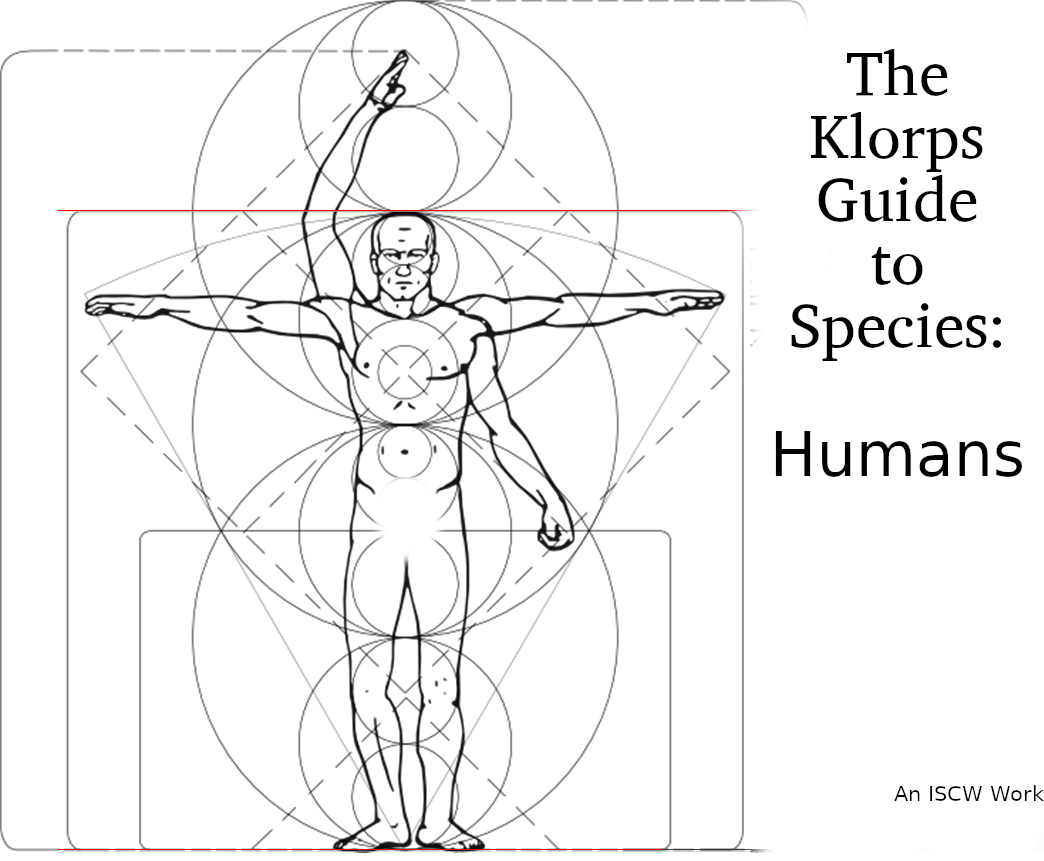
Entry 2,066,897
Name: Human
Home Planet: Earth
Home System: Oxy
Intelligence Level: 7.5/10
Relative Age: 6,000 years
Danger Level: Alpha
Summary:
Humans are a relatively new species on the interplanetary travel front. Their hostile environment forced them to focus on the survival of their species in their home planet rather than the expansion beyond their Solar System. Their current farthest manned voyage reached their singular moon, with more planned for their planetary neighbor, the uninhabited Mars.
However, do not let their limited space travel ability distract you. Studies on the Human Species have revealed that they may be the singular most destructive and terrifying Intelligent Species In the Milky Way Galaxy. Let’s dive into the aspects of this species that make it worth their Alpha Classification.
Earth: Earth is the Home Planet of the Human Species and currently the only planet with permanent Human Civilization. The Classification of Earth, according to the Inter-system Collective of Worlds Planetary Database, is a Level 4 Death World. Level 4 Death Worlds are one of the most deadly environments known to the Galaxy, only beaten by Gas Giants and Level 5 Death Worlds (which the Oxy System Ironically has both of as well in the form of the planet Venus and the Gas Giants Jupiter, Saturn, Uranus, and Neptune). Simply put, before we learned about Humans, any rational scientist would deem Earth uninhabitable for anything above a level 3 Intelligence life form. Its heavy atmosphere is dominated by deadly gasses like nitrogen, oxygen, carbon dioxide, and dihydrogen monoxide. Large pools of dihydrogen monoxide covering around 71% of the planet’s surface, and a series of landmasses showing not only some of the most extreme mountain ranges ever detected on an inhabited planet but also massive temperature variance that has never before been seen on a world that could support life. In short, Earth is a planet of extremes that could only be inhabited by a species of equal or greater extremes. Also Known as, Humans.
Humans
Physical Characteristics: Human Bodies are built to withstand the harsh environment that they live in, moving beyond making the environment a survivable one and making it a necessary one. Humans need elements and compounds such as Oxygen and Dihydrogen Monoxide to survive. Allowing them to live in the toxic atmosphere. Another fascinating aspect of the human body is that they are built for stamina, basic hinge, and ball-and-socket joints, along with the fact that they are one of the only bipedal species in their section of the Galaxy, allows them to move through most if not all terrains presented to them, further specialization allows them to survive in most temperatures in their habitat for at least a short period of time. IsCW scientists estimate that Humans would survive in most environments if provided with a sufficient supply of oxygen. Proper space travel technology would allow Humans to spread rapidly through the Galaxy by planet-hopping to and settling previously uninhabitable planets. If the Human Species developed even the most mediocre Interplanetary Travel Technology, they would likely become one of the most widespread species in as little as a millennium.
Mental Characteristics: Humans have a unique mental build as well as their physical build. In fact, Scientists have been unable to properly classify the Human Species in the same frame as other Milky Way Species. Typically, Species are classified in accordance with their survival preference. Type 1 species are loners, where every individual member acts in their own self-interests, Type 2 species are group survivors where small groups of the species form and work for the interest of the group, Type 3 species is the same as a Type 2, but instead of big groups they look out for the species as a whole, and a Type 4 species is a hive-mind, where every member acts like one. Depending on the situation, the Human Species can fall into any category besides type 4, forcing IsCW scientists and classifiers like myself to develop a new classification system specifically for the species. The new type is a Type H, which represents what we call the Threat Response Scale. Depending on how the Human Species is threatened, their response and their judgment of interests will alter. In a time of peace, the Human Species will fall into the Type 1 classification, looking out for their own interests and shutting themselves off from the interests of the Humans around them. However, when presented with a range of threat levels, they will convert into a Type 2, building groups ranging from 2 to a few million others to deal with the threat. Entire Nations are built to defend the interests of the group, and when the threat is eliminated, the group slowly breaks down as the species return to a Type 1. However, if the threat expands to the species as a whole, it isn’t far off to assume that the Human Species will band into a type 3 species, focusing on the singular interests of the species as a whole’s survival. Though the situation has never occurred in actuality, as the IsCW has ordered no contact with the species, the survival of the species would most likely bind the Humans together. The sliding range of the species’ type makes it absolutely terrifying.
The Fear:
As stated above, Humans are terrifying creatures in the eyes of the rest of the Galaxy. Their origins from an unforgiving planet and ability to survive any condition, whether physical or mental, would make the Human Species one of the most successful Interplanetary Settlers in the History of the Inter-system Collective of Worlds. However, Many Scientists fear that ability in the light of the Species’ self-interest. Studies of Human culture have revealed that though there has never been documented contact with an alien species, Humans have an intense dislike for extraterrestrial beings. In most forms of entertainment, Non-Human Species are the villans that need to be wiped out completely. In addition to that, Human History is littered with members of the species finding other humans and wiping them out of existence because they didn’t like the small differences they found between them. Times that the Species adapted into a Type 2 to eliminate these “others” has led to some of the most horrifying advances in warfare technology. Today around 20 of their “Atomic Bombs” could completely wipe out life on Earth, and a simple mistake or miscommunication could set them all off. If the Human Species is so violent and destructive when dealing with each other, how much more so if they’re dealing with extraterrestrial beings?
Imagine a world where Humans had the same planetary settlement technology as the Setarcas. Drones flying in and filling a planet with Oxygen and Dihydrogen Monoxide, followed by Robots that Reshape the Earth and begin displacing the species that lived there, all culminating in groups of humans entering the planet with weapons more destructive than ever seen before, removing or wiping out the native intelligent species and settling the poisoned world for themselves. While this is a grim image, it is entirely possible that this is what Human settlement would look like. This is why, for the first time in history, the IsCW has ordered that the species be monitored and left untouched in the hopes that their danger level drops before they find another intelligent species in a galaxy they think belongs to them.
Conclusion:
In conclusion, The Human Species is a fascinating and terrifying look at what can come out of a world surrounded by death. The Humans have a belief in a concept known as “Survival of the Fittest,” and nothing rings more true about that saying than the existence of the species itself. In the Oxy System, only the strongest, most intelligent species has a chance of survival, and the result of that unforgiving and hostile environment is an unforgiving and hostile species. One can only hope that their solid foothold in their home planet will eventually soften the species’ edges enough to make contact with them a little less dangerous. Until then, they will remain the crazy fairy tale of the Milky Way Galaxy, a species that, for all intents and purposes, shouldn’t exist.
 Will Fall Writings